Yes, And as Horror: What Pluribus Teaches You About Improv
The show about a hive mind is really a show about staying a person. Which means it's really a show about improv.

There’s a scene in Pluribus where Carol Sturka walks into a room full of people who used to be her neighbors, her colleagues, her friends. Everybody’s smiling. Everybody’s connected. Everybody wants her to feel better. Everybody is part of the same thing now.
Carol is not.
She looks at them the way you’d look at a group of people who’ve decided to start saying “Rabbit” at the end of every sentence and insist that you join. Polite. Alarmed. Planning an exit.
If you’ve done improv, this scene is familiar. You’ve been Carol. You’ve also been the hive.
The hive is the ultimate Yes-And ensemble
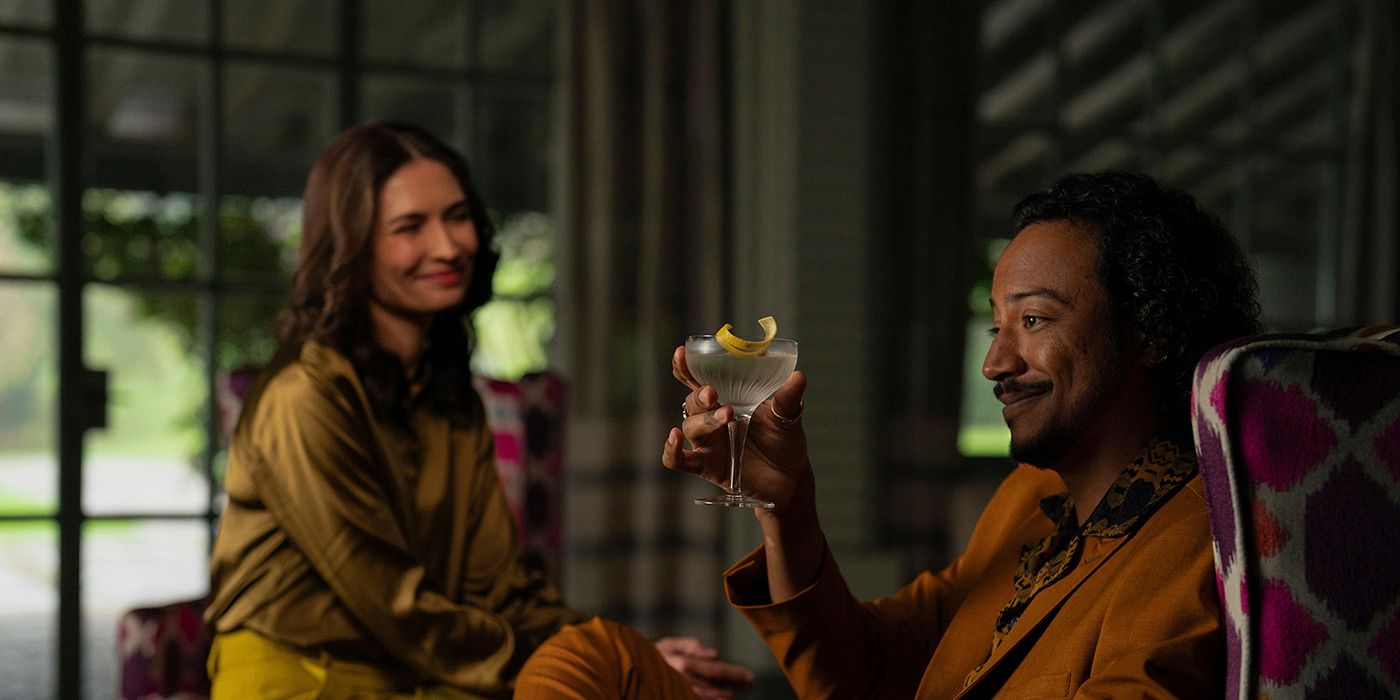
I want to get the joke out of the way first. The hive in Pluribus runs on pure Yes-And. Somebody starts a song, the rest of them sing harmony. Somebody feels something, everybody else feels it too. Somebody needs help, an entire town shows up. There’s no denial. There’s no blocking. There’s no contradiction. You could put these people in front of any Harold team in Chicago and they would pass the audition without a single bad offer for thirty minutes.
They would also be the worst improvisers in the world.
Because, and this is the thing, improv isn’t actually about agreement. That’s what every Level 1 class tells you. Yes-And. Don’t deny. Support your partner. All true. All also a wildly incomplete picture of what the form is for.
Here’s what the hive can’t do, even with unlimited agreement:
- They can’t surprise each other. They already know what the other person is going to say.
- They can’t have stakes. Nothing is at risk because nothing is private.
- They can’t find anything. Discovery requires not already having something. They have everything.
- They can’t be funny. Comedy requires a break in a pattern, and they are one pattern.
A Harold done by the hive would be the smoothest, warmest, most ensemble-driven, completely empty thirty minutes of theater ever performed.
Carol is the ultimate No-But
The show’s protagonist is a romance novelist who hates her own books and doesn’t like people. Before the event, she was the type of person who gets described as “prickly” by everyone who hasn’t met her and “kind of a lot” by everyone who has.
After the event, she is the last full-volume individual human left.
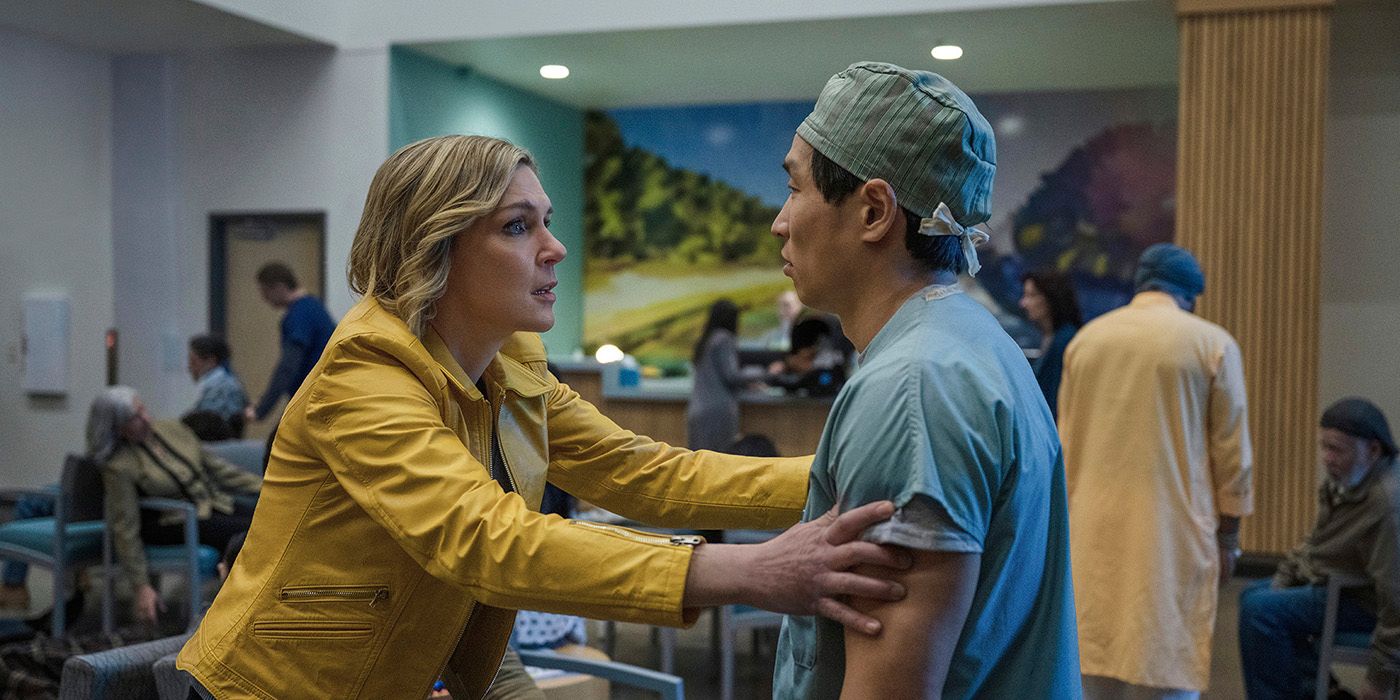
Carol, as a character, is a case study in everything improv teachers tell you not to do. She denies. She blocks. She refuses offers. She stays inside her head. She won’t play. She shuts down scenes.
She is also the only character in the entire show worth watching.
You know who else does that? The best improvisers I’ve ever seen.
Not always, not in every scene. You can’t do long-form if you actually deny everything your partner gives you. But the best ones know when to push back. They know when the scene is drifting into the comfortable middle and somebody has to introduce friction. They know that “yes, and” without an actual “you” on either side of it is just a machine generating agreement. Nothing is happening.
The best improvisers are the ones who keep some of themselves offline. Not because they’re guarded. Because without some privacy, some resistance, some interior, there’s nothing to offer. An improviser who has dissolved entirely into the ensemble isn’t generous. They’re absent.
Yes-And is a tool, not a religion
Here’s the thing. You know how in Level 2 everybody has the Revelation that Yes-And isn’t actually a rule, it’s a posture, and really the deep rule is “don’t deny the reality your partner creates.” Which gives you permission to push back, disagree in character, fight in a scene, as long as you’re accepting the fictional world you’re in.
Pluribus is a full season of that Level 2 revelation, turned up to apocalyptic scale, dressed as a science fiction thriller. The hive has perfect Yes-And at the word level and zero of the thing the word is actually pointing at. Carol, who breaks every improv rule, has more of the real thing than anyone. Because she’s still a person. There’s still a you there to bring to the scene.
You could read the whole show as Vince Gilligan’s extended argument with the concept of emotional labor. But that’s another essay and I’m not smart enough to write it.
What the hive gets wrong about connection
Improv sells itself as a social art. Classes market themselves on community. “Make friends in six weeks.” “Find your people.” Fair. I’ve written a manifesto about this exact thing, so I’m not about to knock it.
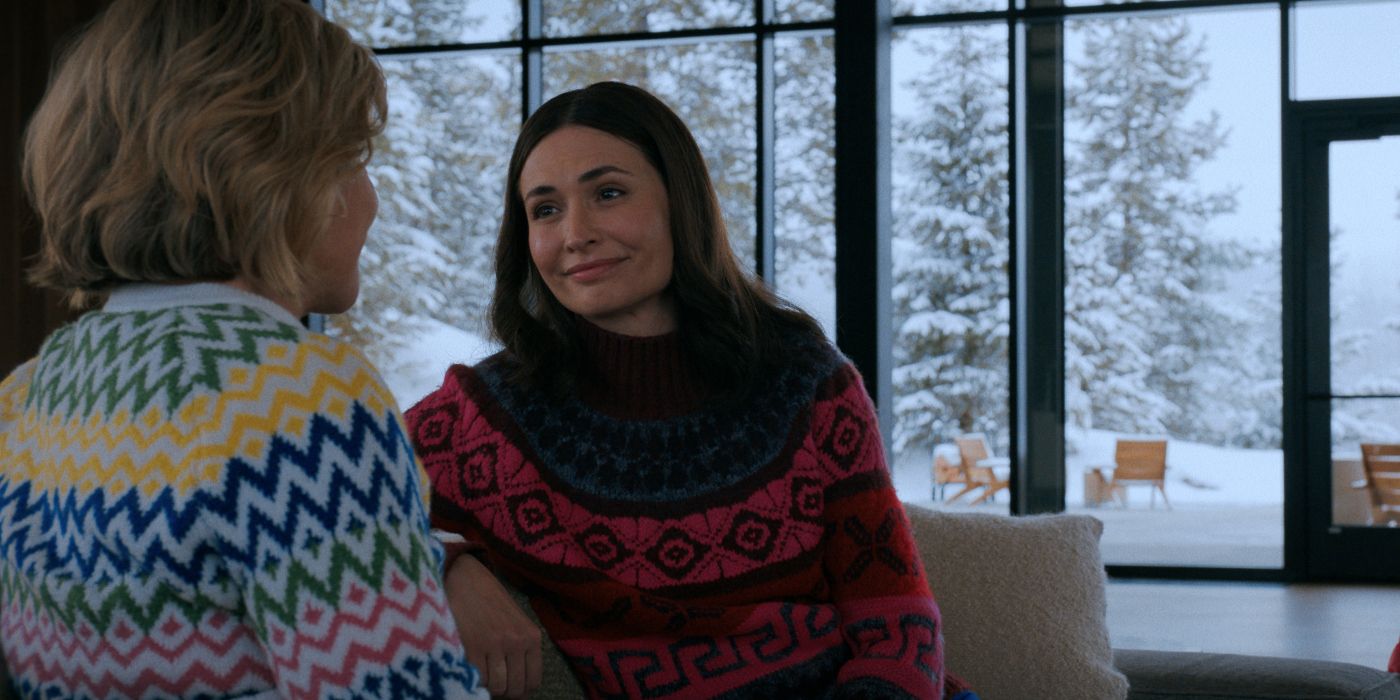
But Pluribus forces a distinction that improvisers should learn to make. There’s connection that happens when two intact people show up and play together. And there’s connection that happens when the boundaries between people melt and nobody is really anyone anymore.
The first is what a good Harold feels like. The second is what the hive is.
They are not the same thing. They’re barely in the same category.
The first requires individuality as a precondition. You bring a self. Your partner brings a self. The scene happens in the gap between you, and the gap is the whole thing. Without the gap there’s nothing to listen across.
The second is what happens when you optimize for agreement so hard you eliminate the gap. Everybody’s having a great time. Nothing is happening.

There’s a reason the best improv troupes are famously full of disagreements. UCB’s four founders, Matt Besser and Amy Poehler and Ian Roberts and Matt Walsh, fought constantly. TJ and Dave argue in interviews about what their form even is. Del Close was legendarily difficult and I would link you to his wiki entry but I don’t want to oversell how much of a difficult genius he was. The ensembles you remember are not the ones who agreed about everything.
You know who agreed about everything? The hive. And they could not put on a show.
The case for staying uncomfortable
Here’s the bleak part. If you take Pluribus seriously, you have to accept that the project of a human life is basically staying uncomfortable enough to remain a human life.
This is not a fun thing to learn.
The show leans hard into it. Carol’s refusal to join the hive is not portrayed as brave. It’s portrayed as stubborn, exhausting, painful, and frequently joyless. She is in grief. She is alone. She remembers things the rest of the world has collectively decided to forget. Her reward for remaining herself is to suffer more than anybody else on the planet.
And yet the show is absolutely on her side. It has to be. Because the alternative is not-her. Which means not a show anymore. Which means nothing worth watching. Which means nothing worth doing.
Improv has a version of this. You know the feeling when a scene is working. When you’re actually in it, actually present, actually risking something. It doesn’t feel like pleasure exactly. It feels like being located in your own body. Alive and not glossing over it.
Contrast with a scene where you’re coasting. Where you’ve turned on the autopilot, started cracking jokes from the outside, let your partner do the heavy lifting while you coast on charm. That’s fine. It’s also dead. You and the audience both know.
The hive is that second thing. Permanently. Forever. Everybody coasting. Nothing at stake.
What this has to do with you
I’m writing this mostly because the show got me thinking about why I do improv in the first place and why I built an app to give people reps without a theater. The honest answer is kind of bleak and kind of not.
The world is pretty hive-adjacent right now. Algorithms write our reactions for us. We outsource our aesthetic opinions to the vibes. Most of what comes across a feed is engineered to erase the gap. To give you the feeling of connection without the risk of it.
Improv is maybe the single most analog thing I know how to do against that. You get in a room. You show up as yourself. You agree to not know what’s next. You play.
And the thing you practice is not agreement. It’s the part that comes before agreement. It’s the having-a-self in the first place. The showing-up with something to agree with.
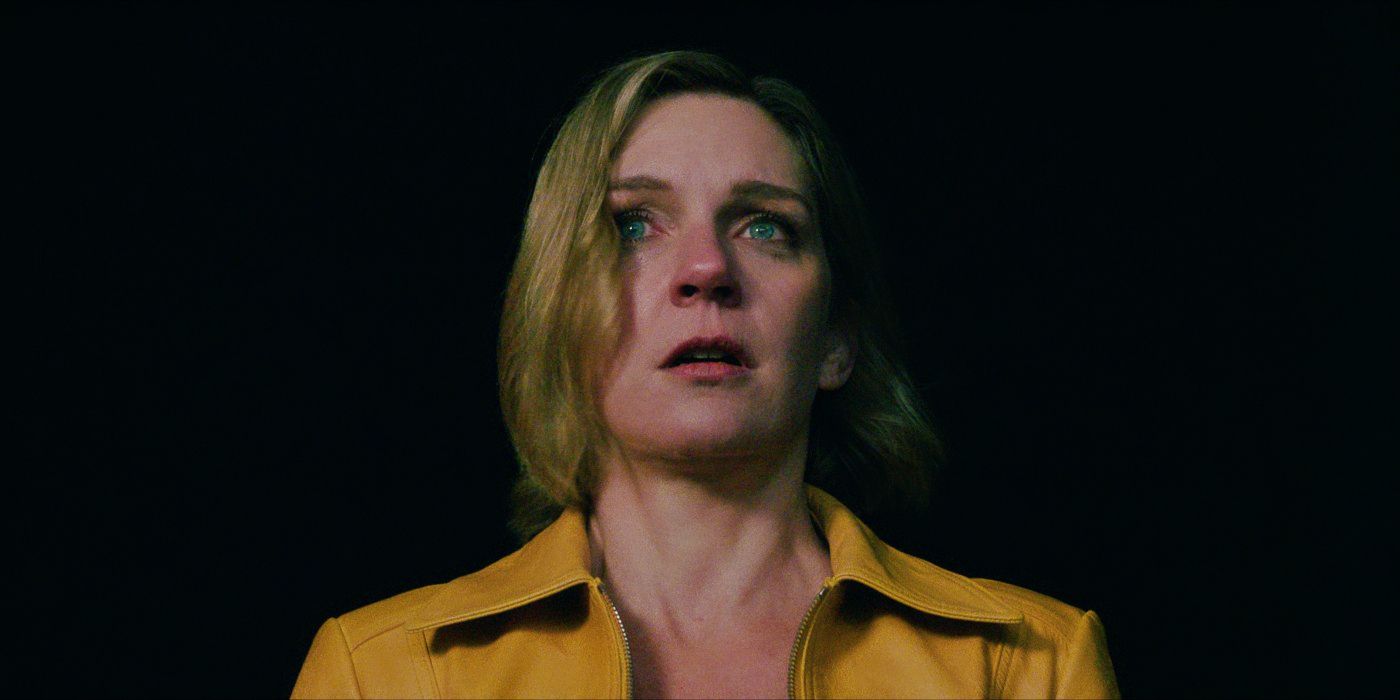
Carol, in Pluribus, has that in excess. She’s the patron saint of unhappy individualists. I don’t want to be Carol. I hope nobody does. But I also don’t want to be the hive. What I want, and what I think most improvisers want when they’re honest about it, is to be a person who can play with other people without dissolving into them. A Carol who finally found a troupe.
That’s the whole thing. That’s improv. That’s also most of the good parts of being alive.
The show doesn’t take itself too seriously. It has jokes. It has Vince Gilligan doing his Vince Gilligan thing where every shot is framed like the universe is watching. It has running gags. It is not a Serious Piece of Art. It is a science fiction show about a hive mind.
But there’s nothing more serious than remembering your own humanity.
And Pluribus is really serious about that one.
Pluribus is streaming on Apple TV+. Images courtesy of Apple TV+ / press.
Related: